As eCommerce becomes increasingly visual and omnichannel, businesses must manage thousands of digital assets across products, campaigns, marketplaces, websites, mobile apps, social media, and other customer touchpoints. Product images, videos, brand graphics, product photography, marketing materials, documents, and other creative assets all need to be accessible, accurate, current, and ready for distribution.
Digital Asset Management (DAM) provides a centralized way to organize, manage, govern, and distribute these assets. For eCommerce businesses, a well-designed DAM for eCommerce strategy can improve content operations, accelerate product launches, strengthen brand consistency, and support better digital customer experiences.
What Is Digital Asset Management (DAM)?
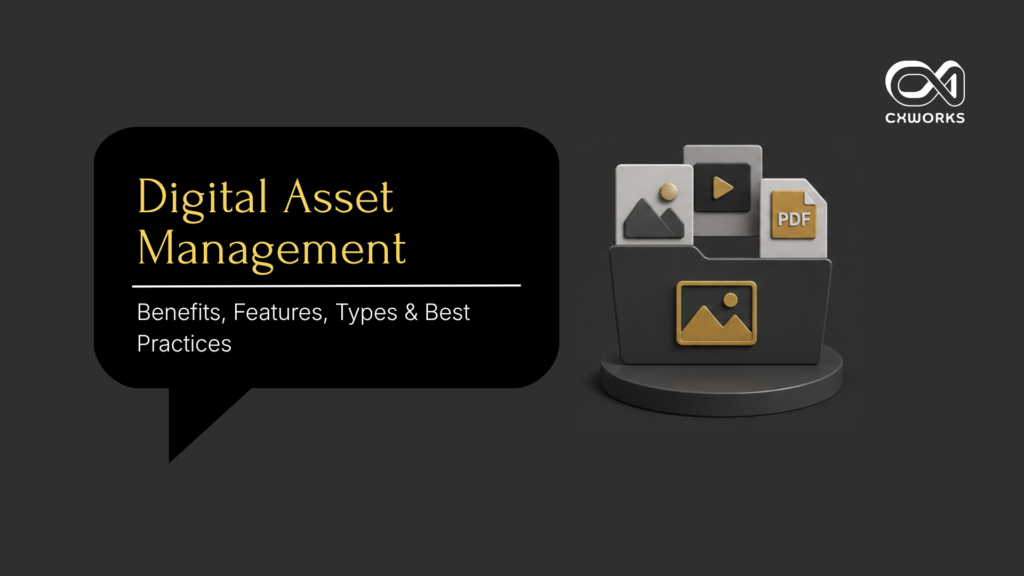
Digital Asset Management is the technology and processes used to store, organize, classify, manage, retrieve, control, and distribute digital content from a centralized area. A Digital Asset Management system acts as a structured digital asset repository where teams can manage files throughout their lifecycle.
Digital assets can include product images, product videos, product photography, logos, illustrations, campaign graphics, documents, packaging visuals, advertisements, social media content, and other brand or creative assets. Instead of keeping these files across local computers, shared folders, cloud drives, and disconnected systems, a DAM creates a controlled digital asset library.
For eCommerce organizations, DAM software becomes particularly valuable when asset volumes and distribution channels increase. Metadata management, asset tagging, taxonomy, version control, permissions, workflows, and content delivery help teams find the right asset and publish it to the right destination more efficiently.
Why eCommerce Businesses Need DAM
Modern eCommerce operations produce a large amount of product media and marketing content. A single product can require multiple photographs, alternate angles, lifestyle imagery, videos, technical diagrams, size charts, promotional graphics, and localized variations.
Without centralized eCommerce Digital Asset Management, these files can become difficult to locate and difficult to govern. Teams may use outdated product images, duplicate assets, inconsistent brand graphics, or files that do not meet the requirements of specific sales channels.
A DAM creates a single source of truth for digital assets. Marketing, merchandising, creative, eCommerce, agencies, and regional teams can work from the same controlled repository while maintaining appropriate access and approval processes.
This becomes even more important for omnichannel commerce. The same product content may need to reach an eCommerce website, marketplace, mobile application, social platform, email campaign, retail display, and regional storefront. DAM supports the content distribution processes required to manage this complexity.
Benefits of DAM for eCommerce
The primary benefit of Digital Asset Management for eCommerce is operational control. Instead of spending time searching through folders or requesting files from other teams, users can locate approved assets through metadata, search, filters, and structured asset organization.
DAM also improves brand consistency. Centralized brand assets and controlled versions reduce the risk of teams using obsolete logos, incorrect product photography, or unapproved marketing materials. This is particularly important for retailers managing multiple brands, regions, and customer-facing channels.
Another important benefit is faster content production. Creative teams can reuse existing assets, while merchandising and marketing teams can quickly access approved files for campaigns and product launches. Automated workflows can reduce manual handoffs between creation, review, approval, and publication.
DAM can also support better product experiences. High-quality product images and videos can be delivered more consistently across customer touchpoints, helping shoppers understand products before making a purchase.
For larger organizations, Enterprise Digital Asset Management can provide stronger governance around permissions, usage rights, version control, metadata, and regional distribution. This reduces operational risk while creating a scalable foundation for digital content management.
Key Features of an eCommerce DAM Platform
A modern Digital Asset Management platform for eCommerce should provide more than simple file storage. Its value comes from making digital content searchable, governed, reusable, and distributable.
Centralized Digital Asset Library
A centralized asset library provides a single location for product media, brand assets, creative assets, campaign content, and other digital files. Users can search and retrieve approved content without relying on disconnected storage systems.
Metadata and Asset Taxonomy
Metadata describes an asset and makes it easier to discover. Product identifiers, categories, brands, regions, campaign names, usage rights, file types, and other attributes can be associated with each asset. A structured asset taxonomy ensures that assets are categorized consistently. Together, metadata and taxonomy make large digital repositories easier to navigate and maintain.
Search, Tagging, and Filtering
Powerful search capabilities allow users to find assets using keywords, tags, metadata, categories, file types, product information, or other attributes. This is essential when an organization manages thousands or millions of files.
Version Control and Workflows
Version control helps teams distinguish current assets from older versions. DAM workflows can support asset submission, review, approval, revision, and publishing, reducing the likelihood that unapproved content reaches customers.
Rights and Permissions Management
Asset rights management helps organizations control who can access, modify, download, or distribute particular assets. Usage rights and expiration dates can also be tracked when required.
Content Delivery and Distribution
A DAM should make approved assets available to the systems and channels that need them. Integrations, APIs, and automated content delivery can help connect the repository with websites, commerce platforms, marketplaces, CMS platforms, and other digital channels.
Types of Digital Asset Management Systems
DAM solutions can vary according to organizational size, architecture, and business requirements. Cloud-based DAM platforms are widely used because they provide centralized access without requiring organizations to manage extensive infrastructure.
Enterprise DAM systems are designed for organizations with large asset libraries, complex workflows, multiple teams, regional operations, and strict governance requirements. They typically provide advanced permissions, metadata models, integrations, workflows, and scalability.
Some DAM solutions focus on creative and marketing operations, while others are designed around product content and commerce. The right Digital Asset Management solution depends on the type of assets being managed, the number of users and channels involved, and the broader eCommerce technology architecture.
DAM vs PIM: What Is the Difference?
DAM and PIM solve related but different problems.
PIM, or Product Information Management, manages structured product information such as product names, descriptions, specifications, dimensions, attributes, SKUs, categories, and other commercial information.
DAM manages digital assets such as product images, videos, graphics, documents, and other media.
For example, a PIM may contain the specifications and description for a laptop, while the DAM stores its product photography, lifestyle images, product videos, and promotional graphics. The two systems work best together. PIM provides structured product information, while DAM provides the associated product media. Integrating them creates a more complete product content management process.
DAM vs CMS vs PIM: Understanding the eCommerce Content Stack
DAM, PIM, and CMS are complementary components of the modern eCommerce content stack.A PIM manages structured product information. A DAM manages digital media and creative assets. A CMS manages website and editorial content and determines how content is presented through digital experiences.
In a connected architecture, product information from PIM can be combined with product media from DAM and delivered through a CMS or commerce platform. This separation allows each system to perform a specialized role while supporting consistent omnichannel content.
Common eCommerce Use Cases for DAM
One of the most common use cases is product asset management. Retailers can store product photography, alternate images, videos, diagrams, and other product media alongside metadata that makes assets easy to locate.
Marketing teams can use DAM for campaign asset management, allowing approved banners, advertisements, social media graphics, email visuals, and promotional content to be shared across channels.
DAM is also useful for marketplace and omnichannel operations. Different channels often have different image formats, dimensions, naming conventions, and content requirements. A centralized asset repository can help teams prepare and distribute appropriate versions without recreating content unnecessarily. For global retailers, DAM can support localization by managing regional assets, language-specific creative, market variations, and usage permissions.
How DAM Integrates With the eCommerce Technology Stack
DAM should not operate as an isolated content repository. Its greatest value comes from integration with the wider commerce space. A typical architecture connects DAM with PIM, eCommerce platforms, CMS platforms, search and product discovery technologies, marketing platforms, CDPs, marketplaces, and other downstream systems.
For example, PIM can provide product attributes and identifiers while DAM provides associated product images and videos. The commerce platform can then combine these resources to create product pages, while a CMS can manage surrounding editorial experiences. APIs and automated workflows can help synchronize assets and reduce manual content movement. This creates a more efficient content supply chain and supports consistent digital experiences across customer touchpoints.
How to Choose a DAM for eCommerce
The right DAM software for eCommerce should be evaluated against business requirements. Start by assessing asset volume, asset types, users, brands, regions, channels, and workflows. Consider how many product images and videos are managed today and how quickly that volume is expected to grow.
Integration capability is equally important. The DAM should work effectively with the organization’s PIM, commerce platform, CMS, marketing technology, and other relevant systems. Search and metadata capabilities should also receive significant attention. A repository becomes difficult to manage when users cannot reliably find the assets they need.
Organizations should additionally evaluate permissions, version control, approval workflows, rights management, APIs, scalability, security, performance, and total cost of ownership.
DAM Implementation Best Practices for eCommerce
Successful DAM implementation begins with governance. Before migrating assets, organizations should define ownership, naming conventions, metadata standards, taxonomy, permissions, approval workflows, and asset lifecycle rules.
Asset migration should also be approached carefully. Moving every historical file into a new repository without cleaning duplicates or obsolete assets can reproduce existing problems in a new system.
Metadata should be designed around how users actually search for content. Product identifiers, asset types, categories, brands, regions, campaigns, usage rights, and other business attributes should be standardized.
Organizations should also integrate DAM with the systems that depend on digital assets. The goal is not simply to create another content repository but to establish an efficient and connected content operation.
Common DAM Challenges and How to Avoid Them
One of the biggest challenges is poor governance. Without clear ownership and standards, a DAM can become another unstructured collection of files. Establishing governance before large-scale migration helps prevent this.
Another challenge is inconsistent metadata. If different teams use different naming and tagging conventions, search becomes unreliable. A standardized taxonomy and controlled metadata model can significantly improve asset discoverability. User adoption can also determine whether a DAM succeeds. Teams need clear workflows, training, and processes that make the system easier than existing alternatives. Integration complexity is another consideration. DAM should be incorporated into the broader eCommerce architecture instead of treated as a standalone application.
DAM and AI in eCommerce
AI is expanding the capabilities of digital asset management. AI-powered systems can analyze images and videos, automatically generate metadata, recognize objects, classify content, and improve asset discovery. AI can also help automate tagging and categorization. Instead of manually adding every descriptive attribute, organizations can use machine-assisted processes to enrich large asset libraries.
Generative AI introduces additional possibilities for creating or adapting marketing and product content. However, governance remains important. AI-generated assets need appropriate review, brand controls, rights management, and approval workflows before being distributed to customers. The combination of DAM and AI can therefore improve content operations while keeping human oversight in critical areas.
Measuring the Success of a DAM Strategy
DAM performance should be measured through operational, content, and business outcomes.Organizations can monitor how quickly users find assets, how often assets are reused, how much duplicate content is reduced, and how long it takes to move assets from creation to publication.
Other useful indicators include asset adoption, workflow completion time, content production efficiency, percentage of assets with complete metadata, and usage of approved assets across channels.The broader business impact can be evaluated by examining improvements in product launch speed, content consistency, digital customer experience, and the efficiency of teams responsible for commerce and marketing operations.
Future Trends in Digital Asset Management for eCommerce
The future of DAM will increasingly involve automation, AI, intelligent metadata, composable architecture, and real-time content distribution. AI-assisted asset enrichment will make large repositories easier to organize and search. Automated workflows will reduce manual content operations, while stronger integrations will connect DAM more closely with PIM, commerce platforms, CMS platforms, marketplaces, and marketing systems.
Another important trend is the shift toward content operations designed for multiple digital experiences. As brands expand across websites, apps, marketplaces, social channels, and emerging AI-powered discovery systems, digital assets need to be structured for reuse and distribution instead of stored only for internal reference. This makes DAM an increasingly important part of the scalable eCommerce technology stack.
Frequently Asked Questions
What is DAM in eCommerce?
DAM in eCommerce is a system for centrally managing digital assets such as product images, product videos, brand assets, marketing graphics, and other media used across commerce channels.
What is the difference between DAM and PIM?
PIM manages structured product information, while DAM manages digital media and creative assets. Integrating both systems creates a more complete product content workflow.
Why do retailers need DAM software?
Retailers use DAM software to organize large volumes of product and marketing assets, improve asset discovery, maintain brand consistency, control usage rights, and distribute content efficiently across channels.
Can DAM integrate with an eCommerce platform?
Yes. Modern DAM platforms can integrate with commerce platforms through APIs, connectors, and content delivery mechanisms. They can also connect with PIM, CMS, marketplace, and marketing technologies.
Is DAM useful for small eCommerce businesses?
DAM can be useful for smaller businesses when digital asset volumes or channel complexity begins to increase. The appropriate solution should match the organization’s current requirements and expected growth.
How does AI improve Digital Asset Management?
AI can automate metadata generation, image recognition, asset classification, tagging, search, and other repetitive tasks. This can make large asset libraries easier to manage while reducing manual effort.
Conclusion: Building a Scalable Digital Asset Strategy With DAM
Digital Asset Management is more than a centralized file storage system. For eCommerce businesses, it provides the foundation for organizing, governing, enriching, reusing, and distributing the digital content required to deliver consistent customer experiences.
A strong DAM for eCommerce strategy connects digital assets with the broader product content and commerce system. When integrated with PIM, CMS, commerce platforms, marketing technologies, and other systems, DAM can create a more efficient content supply chain.
As product catalogs grow and customer journeys become increasingly omnichannel, organizations need digital content that is accurate, accessible, governed, and ready for distribution. A scalable Digital Asset Management platform helps businesses build that foundation while supporting faster content operations and more consistent digital CX.